lunes, 27 de julio de 2009
Despicable

This is utterly despicable. Apparently the grand, bipartisan bargain being worked out in the Senate Finance Committee includes neither a public option nor an employer mandate. However, the pieces favored by the drug, medical supply, and insurance industries--most importantly, subsidies to buy private insurance and the individual mandate--are included. And to top it all off, the bill includes a tax on benefits for generous health care plans, which is basically a smack in the face to organized labor. In essence, any ounce of progressivism has basically been squeezed from the bill, while the major industry players get everything they want. I wonder if it has anything to do with lobbying and campaign contributions from the health care industry?
I realize that there are a lot of different versions of health care reform floating around. The Senate Finance Committee is just one of many committees in the House and Senate which are working on reform plans. Nevertheless, the craven capitulation to business interests exhibited by the Finance Committee is so grotesque that I had to comment on it.
There could be a silver lining, however. Perhaps sickening examples of corruption such as this one will further convince the public that the piecemeal reform efforts currently being advanced in Washington are hopeless and that the only solution is single payer, universal medicare.

martes, 14 de julio de 2009
Bernie Sanders on Public Health Care
Via Ezra Klein, please check out this fantastic clip of Bernie Sanders providing the United States Senate a little lesson on the U.S. health care system. I agree completely with Mr. Klein on this one, this clip shows the power of having legitimate progressive voices in Washington. I would go even further, though. Frankly, this little 3 minute speech is downright radical. On the floor of the U.S. Senate, Sanders exposes the profound gap between the views of the American people on health care and those of the folks whom we have elected to represent our interests. He also reveals that, gasp, America already has a single payer and fully socialized health care system, both of which are amazingly popular! Thank you, Mr. Sanders and thank you to the people of Vermont for electing him.
lunes, 6 de julio de 2009
"There’s very little truth to anything you’ve read about the coup in American newspapers"

Via Borev.net. Ken Silverstein of Harper's has a great piece on the coup in Honduras, as well as Obama's abysmal response. The title of this post is a quote from Silverstein's article. It's short, sweet, and to the point. Check it out.
viernes, 3 de julio de 2009
Terrific Piece on Healthcare
Jane Slaughter over at Labor Notes just wrote a great piece about Labor's role in the health care reform debate. I highly suggest you read it. In the article, Ms. Slaughter points out that, while the union rank-and-file largely supports universal medicare (hundreds of union locals, as well as several state federations and labor councils have endorsed it), the leadership of Change to Win and the AFL-CIO do not, and have instead come out in favor of public-private competition. At the closing of the article, Ms. Slaughter expressed, in the clearest and most concise language I have ever read, why this position is so truly puzzling (and maddening):
Everyone who is following the health care debate knows that passing single payer in the current Congress is basically impossible. According to Ms. Slaughter, the sponsor of single payer legislation in the house, John Conyers, was asked “What would it take this Congress to pass single payer?” back in May. His response: "Nuclear weaponry”. Unfortunately, I don't think Mr. Conyers is too far off. The health care industry just has too much power. Our legislators are too dependent on health care campaign contributions and simply too corrupt to challenge the interests of the industry. It truly is a sad reflection on the health of our democracy when arguably the most popular health care reform proposal, supported by two thirds of the public and 60% of Physicians, is "off the table" and politically impossible. That's the reality we're living in. Nevertheless, if a strong public option which competes with private insurers is the best we could possibly get, as unfortunately I think is the case, then why come out for a public option right out of the box? Even if the labor movement does not universally agree that single payer is the best option (Andy Stern, for one, I'm sure is against it), it would nonetheless be a strong negotiating tactic for them all to come out in favor of single payer. Sure, labor is not what it once was. But unions still represent tens of millions of Americans. The unions also ought to have at least a little leverage over Obama, after they were central to his election victories in places like Pennsylvania and Ohio last year.
Imagine if the entire labor movement joined the movement for single payer, which is already growing and making waves without the support of the national union leadership. Imagine if the rally held last week, which drew 7,000 people, called for Medicare for all. In such circumstances, wouldn't the Congress have no choice but to at least have a public option included in the bill, rather than just subsidies and mandates for private insurance? Wouldn't it be harder for spineless, corporate hacks like my Senator, Joe Lieberman, to oppose a public option? Joe, incidentally, was backed by nearly the entire Connecticut labor movement in his 2006 primary race with Ned Lamont. The same criticism could also be levied at numerous liberal commentators, by the way, such as the entire staff of Open Left, who never say a single word about single payer. I honestly cannot see any circumstance in which aggressively advocating for single payer could hurt the progressive movement in terms of the final outcome of the legislation. And even within the confines of the broad framework adopted by labor in this debate, there's still more room for pressure. Instead of asking for a generic public option, for instance, why not specifically demand a public option with the power to negotiate rates, or demand that Medicare be opened up to all, instead of separating people into multiple, and therefore weaker plans?
Alas, Ms. Slaughter's call to push for the whole dollar, even though we know we'll probably just get 50 cents, is largely theoretical at this point. Labor, as well as much of the progressive movement, have already made their first move and that move is rather week. If we end up with a poor health plan with either a weak or nonexistent public option, Jane Slaughter will have diagnosed one of the main reasons why.
Say you’re a union bargainer who thinks her members deserve a dollar-an-hour raise, but believes that realistically the company won’t give more than 50 cents. Would you start out by asking for 50 cents? Yet that’s what union lobbyists are doing, in effect, around health care reform in D.C. this year. It’s how labor has been doing its politics for a while now: behaving as supplicants rather than as actors trying to define the game, consenting to the accepted wisdom.Jane Slaughter, I could not agree with you more! I tried to make the same point back in March, though in a far more stumbling and far less persuasive manner.
Everyone who is following the health care debate knows that passing single payer in the current Congress is basically impossible. According to Ms. Slaughter, the sponsor of single payer legislation in the house, John Conyers, was asked “What would it take this Congress to pass single payer?” back in May. His response: "Nuclear weaponry”. Unfortunately, I don't think Mr. Conyers is too far off. The health care industry just has too much power. Our legislators are too dependent on health care campaign contributions and simply too corrupt to challenge the interests of the industry. It truly is a sad reflection on the health of our democracy when arguably the most popular health care reform proposal, supported by two thirds of the public and 60% of Physicians, is "off the table" and politically impossible. That's the reality we're living in. Nevertheless, if a strong public option which competes with private insurers is the best we could possibly get, as unfortunately I think is the case, then why come out for a public option right out of the box? Even if the labor movement does not universally agree that single payer is the best option (Andy Stern, for one, I'm sure is against it), it would nonetheless be a strong negotiating tactic for them all to come out in favor of single payer. Sure, labor is not what it once was. But unions still represent tens of millions of Americans. The unions also ought to have at least a little leverage over Obama, after they were central to his election victories in places like Pennsylvania and Ohio last year.
Imagine if the entire labor movement joined the movement for single payer, which is already growing and making waves without the support of the national union leadership. Imagine if the rally held last week, which drew 7,000 people, called for Medicare for all. In such circumstances, wouldn't the Congress have no choice but to at least have a public option included in the bill, rather than just subsidies and mandates for private insurance? Wouldn't it be harder for spineless, corporate hacks like my Senator, Joe Lieberman, to oppose a public option? Joe, incidentally, was backed by nearly the entire Connecticut labor movement in his 2006 primary race with Ned Lamont. The same criticism could also be levied at numerous liberal commentators, by the way, such as the entire staff of Open Left, who never say a single word about single payer. I honestly cannot see any circumstance in which aggressively advocating for single payer could hurt the progressive movement in terms of the final outcome of the legislation. And even within the confines of the broad framework adopted by labor in this debate, there's still more room for pressure. Instead of asking for a generic public option, for instance, why not specifically demand a public option with the power to negotiate rates, or demand that Medicare be opened up to all, instead of separating people into multiple, and therefore weaker plans?
Alas, Ms. Slaughter's call to push for the whole dollar, even though we know we'll probably just get 50 cents, is largely theoretical at this point. Labor, as well as much of the progressive movement, have already made their first move and that move is rather week. If we end up with a poor health plan with either a weak or nonexistent public option, Jane Slaughter will have diagnosed one of the main reasons why.
jueves, 25 de junio de 2009
What the hell are we doing in Pakistan?
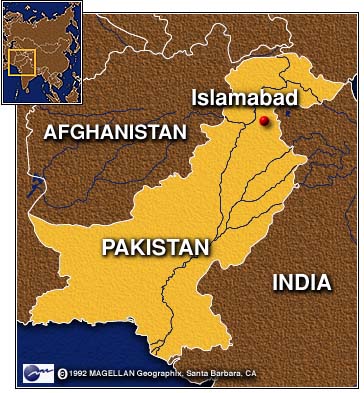
I apologize for the strong-worded title, but I've been asking myself this question since I saw Amy Goodman's interview with Pakistani opposition leader Imran Khan on Democracy Now yesterday. Ostensibly, of course, we're fighting terrorism in Pakistan. More specifically, we're fighting the Taliban, who are supposedly just like the Afghanistani Taliban, if not part of the same entity. We're also fighting the remnants of Al Qaeda. And perhaps we're still looking for Osama Bin Laden? Our method of choice for fighting terrorism has been attacking the bases of suspected militants in the tribal areas of Pakistan with unmanned, remote-controlled aircraft. We're also funding and arming the Pakistani military and pressuring them to eliminate the Taliban from the Swat valley.
The reason I ask what we are doing in Pakistan is because every tactic the U.S. government has chosen is having the exact opposite effect of its officially stated objective. Rather than eliminating the threat of terrorism, each of our actions appear to increase the threat. Imran Khan's interview makes that abundantly clear.
In the latter part of the interview, Amy Goodman asked Imran Khan about his views of the role of the United States in Pakistan and more specifically, the impact of the recent decision to expand the war in Afghanistan and set up a $700 million embassy in Islamabad. In answering the question, Mr. Khan gave a brief overview of the the history of the Pakistani Taliban and argued that the emergence of terrorism in Pakistan is a direct result of U.S. policy in the region, particularly the occupation of Afghanistan:
Well, there was no terrorism in Pakistan, we had no suicide bombing in Pakistan, ’til Pakistan sent its troops on—under pressure from the US. Musharraf, General Musharraf, capitulated under the pressure and sent Pakistani troops into the tribal area and Waziristan. So it was that that resulted in what was the new phenomenon: the Pakistani Taliban. We had no militant Taliban in Pakistan, until we got in—we were forced into this US war on terror by a military dictator, not by the people of Pakistan. And people never owned this war. People always thought that this is not our war, and quite rightly, because we did not have any terrorism in Pakistan, as subsequently grew.I had never heard this explanation before, and was surprised, frankly, to learn that the Pakistani Taliban were such a recent phenomenon. If we are to believe what Mr. Khan says, and I have no reason to doubt him, we must conclude that the terrorists we are supposedly pursuing in Afghanistan would not have existed had we not invaded Afghanistan and/or forced Pakistan to send its army on its own people.
The more operations we did, the more reaction came. And suddenly, as now, we have thirty Taliban groups. I mean, these groups call themselves Taliban, but basically these are radicalized people, these are extremists. And extremism is growing in Pakistan, the more we are being engulfed in this war, which is based in, basically, Afghanistan. So, as long as the US troops are in Afghanistan, I’m afraid there’s no peace in Pakistan either, because the tribal areas are basically—there’s no border there, so the Pashtuns are split between—on the border between Afghanistan and Pakistan, and we have, you know, this movement across the border. And, you know, to send a—think that the Pakistan army is going to stop it—I think Pakistan army itself is going to be stuck in this quagmire, the same as the US in Afghanistan.
Earlier in the interview, Ms. Goodman asked Mr. Khan about the drone attacks in Northwestern Pakistan. He had this to say:
So, so far, I have to say, they—all these operations make no sense. These drone attacks—I don’t know why they haven’t done an analysis that—what are the benefits of drone attacks, and what is the damage done in increased hatred against the US, anti-Americanism?...There’s—according to the Pakistan government, the figures they released, of sixty drone attacks, only fourteen Al-Qaeda were killed, 700 civilians died, not to mention the numbers injured. And so, this collateral damage, each time there’s collateral damage, militancy increases in that area. So this is counterproductive.Unlike the history of the Pakistani Taliban, I was aware of the U.S. drone attacks and the unacceptable level of civilian casualties which they have caused. I discussed the drone attacks in the context of our increasing shift towards robotic warfare in this post last January. His question as to whether anyone has done a cost-benefit analysis of the attacks is a very good one. The impact of the drone attacks, it appears, is quite similar to that of Musharraf's invasion of the tribal areas and our invasion of Afghanistan. Rather than reducing the threat of terrorism, we are radicalizing people and creating fertile ground for the recruitment of more terrorists.
Finally, Mr. Khan dedicated much of the interview to discussing the plight of the people in the Swat valley, which the Pakistani army has recently invaded in order to eliminate the Taliban. The Swat Taliban, of which there are a few thousand, are an even newer phenomenon than the Taliban in the border regions of the country. They are not not well liked by the vast majority of people in Swat, according to Khan. As a result, the people wanted something to be done about them. However, he believes the actions of the Pakistani army in Swat are entirely misguided and are creating a humanitarian disaster:
And it is true that the people wanted some sort of an operation, but not actually what happened. To go after 5,000 Taliban, they have displaced three-and-a-half million people. To use artillery, helicopter gunships, F-16s on civilian population, they’ve caused this massive human catastrophe. And so, yes, people wanted an operation, but they didn’t want this, because this now, if anything, is going to fan militancy. How are they going to rehabilitate these people? Their crops are destroyed. These are subsistence farmers, most of them. Their fruit orchards, their animals. So what are they going to go back to? This is another problem we face now.In other words, the constant theme of U.S. policy in Pakistan repeats itself: rather than solving the problem of terrorism, we have once again chosen tactics which further radicalize the population, not to mention provoking a humanitarian crisis as well. If you'd like to read more about the humanitarian conditions in Swat, in which over 2 million people have been displaced, check out Kathy Kelly's piece in today's Counterpunch. I should warn you, however, that the details are rather horrifying, particularly in light of the fact that the invasion has U.S. backing. Her article ends with a poignant question:
If we want to counter Al-Qaeda, if we want to be safe from further terrorist attacks, we'd do well to remember that even when we don’t recognize the humanity of people bearing the brunt of our wars, these very people have eyes to see and ears to hear. They must be asking themselves, who are the terrorists?In light of the manifest failure of U.S. policy in Pakistan to achieve its objectives, and its high success rate in terms of increasing the threat of terrorism, I return to my original question: Why are we doing what we're doing in Pakistan? During the Bush years, many Democrats blamed the crimes of the administration on incompetence and stupidity. It was a misdiagnosis then, which hid the truly malicious intentions of the Bushies, and I would venture that it's even wronger now under the current administration. Our current president obviously runs circles around our former chief executives intellectually. I doubt lack of competence is a big problem for his cabinet or the military brass either. Unfortunately, I cannot help but reach the conclusion that our current administration knows full well that its behavior in Pakistan is radicalizing the population, increasing the threat of terrorism, killing thousands of civilians, and ruining the lives of millions more innocent people.
My real question then, is what are their motives? The best guess I can come up with is that the U.S. and Pakistani military establishment are truly fearful of the Lawyer's Movement, which lead a successful campaign of nonviolent civil disobedience to restore the chief justice of Pakistan and paved the way for the transition to civilian rule and the end of the Musharraf regime. Perhaps they fear that this movement will lead to the further democratization of Pakistani society, which one day might threaten its status as the best bud of the U.S. and transnational capital. As such, they are destabilizing the country in order to lay the foundations for the return of military rule, which could crush the incipient democracy movement of the Pakistani lawyers. However, the drone attacks began under the Musharraf regime, not when the civilians in power. As such, my logic could be all wrong.
At this point, I remain perplexed. What I do know, however, is that our current strategy isn't working and I'm not naive enough to think that it's just a result of incompetence. Something else is a foot and whatever it is, it can't be good.
domingo, 21 de junio de 2009
If only...
I'll be completely honest, I really have no idea what to make of the post-election turmoil in Iran. Based on what I've seen, mostly on Democracy Now and The Real News, I do not agree with folks like Paul Craig Roberts who claim that the movement is just another CIA-orchestrated/U.S.-backed "color revolution" like the Orange revolution in Ukraine or the Rose revolution in Georgia. Rather, I'm much more inclined to agree with Pepe Escobar of the Real News that the uprising is completely indigenous and a legitimate expression of the will of the Iranian people. I do not claim to be any sort of expert, however. My opinions on the events are exactly that, opinions, laced with a heavy dose of hope.
Regardless of the circumstances behind the uprising, I think Paul Blake, in his interview with Pepe Escobar linked to above, made a very keen observation about the transpirings in Iran. In the last minute of the interview, Blake contrasts the behavior of Mir Hossein Mousavi and his supporters with that of Al Gore and American Democrats in 2000. He points out that Mousavi and his supporters have launched days of protests in cities throughout the country despite facing an authoritarian government and the several thousand member basiji paramilitary force, which has free reign to terrorize the public with impunity. Al Gore, on the other hand, quickly forfeited the election and did not once call for civil disobedience. Seeing the Iranians display such courage, one has to wonder what would have happened if Al Gore had acted like Mousavi and called for demonstrations against the illegitimate election of George Bush. Could anyone seriously deny that thousands, if not millions of Americans would have likely answered his call? And if he had, what would have happened? Perhaps Bush would've won anyway, but he would have had to contend with a large section of the public that not only thought his victory was fraudulent but actively mobilized against him. And maybe, just maybe, Gore would have won. And if he had, he would have had a mobilized, active public to thank for it. A public with high hopes and demands of their president and a public with leverage.
But I digress. Here's to hoping that folks like Paul Craig Roberts are wrong and the people of Iran continue displaying such awe inspiring courage. Most importantly, I hope their efforts are not in vane and they are able to construct a more just, open, and democratic society for themselves as a result of these protests.
Regardless of the circumstances behind the uprising, I think Paul Blake, in his interview with Pepe Escobar linked to above, made a very keen observation about the transpirings in Iran. In the last minute of the interview, Blake contrasts the behavior of Mir Hossein Mousavi and his supporters with that of Al Gore and American Democrats in 2000. He points out that Mousavi and his supporters have launched days of protests in cities throughout the country despite facing an authoritarian government and the several thousand member basiji paramilitary force, which has free reign to terrorize the public with impunity. Al Gore, on the other hand, quickly forfeited the election and did not once call for civil disobedience. Seeing the Iranians display such courage, one has to wonder what would have happened if Al Gore had acted like Mousavi and called for demonstrations against the illegitimate election of George Bush. Could anyone seriously deny that thousands, if not millions of Americans would have likely answered his call? And if he had, what would have happened? Perhaps Bush would've won anyway, but he would have had to contend with a large section of the public that not only thought his victory was fraudulent but actively mobilized against him. And maybe, just maybe, Gore would have won. And if he had, he would have had a mobilized, active public to thank for it. A public with high hopes and demands of their president and a public with leverage.
But I digress. Here's to hoping that folks like Paul Craig Roberts are wrong and the people of Iran continue displaying such awe inspiring courage. Most importantly, I hope their efforts are not in vane and they are able to construct a more just, open, and democratic society for themselves as a result of these protests.
miércoles, 17 de junio de 2009
By narrow margin, congress passes war appropriations bill. Dennis Kucinich responds
Yesterday, by a narrow margin, Congress passed a war appropriations bill, totaling over $100 billion dollars. The bill will fund the continued occupation of Iraq, an expansion of the war in Afghanistan, and provide the International Monetary Fund (IMF) with billions in additional capital, apparently to wage economic war against the third world. Congressman Dennis Kucinich (D-OH) responded to the passage of the bill:
There’s money, too, for the IMF, presumably to bail out European banks, billions for the IMF, so they can force low- and middle-income nations to cut jobs, wages, healthcare and retirement security, just like corporate America does to our constituents. And there’s money to incentivize the purchase of more cars, but not necessarily from the US, because a Buy America mandate was not allowed. Another $106 billion, and all we get is a lousy war. Pretty soon that’s going to be about the only thing made in America: war.
martes, 9 de junio de 2009
Mark Weisbrot reveals true purpose of the additional IMF funds
Via Znet (article originally appeared on Firedoglake), Mark Weisbrot, co-director of CEPR, reveals what is likely the true purpose of the additional funding for the IMF requested by President Obama.
Obama claims the funds are necessary for a global economic stimulus, but a recent CEPR study demonstrated that nearly all of the existing IMF agreements call for interest rate hikes, budget cuts, and/or tax increases. Such policies are the exact opposite of what you want to do during a recession and there is little evidence the IMF will change its ways if it becomes newly flush with cash. As such, Weisbrot believes that, in reality, the IMF funding is a means by which American taxpayers can cover the losses of European banks, which made tons of bad loans to Central and Eastern Europe in recent years. The process would look something like this: we provide money to the IMF, which is then loaned to crisis-stricken Central and Eastern European governments, who then use the money to pay back the debts businesses and individuals in their countries owe to Western European banks. Interest rate hikes, spending cuts, and tax increases on the poor would help facilitate the repayment of loans, at the expense of driving these countries further into recession.
Yet another example of the sad reality we're living in today. Heads they win, tails you lose.
Thanks to Professor Weisbrot for the article.
Obama claims the funds are necessary for a global economic stimulus, but a recent CEPR study demonstrated that nearly all of the existing IMF agreements call for interest rate hikes, budget cuts, and/or tax increases. Such policies are the exact opposite of what you want to do during a recession and there is little evidence the IMF will change its ways if it becomes newly flush with cash. As such, Weisbrot believes that, in reality, the IMF funding is a means by which American taxpayers can cover the losses of European banks, which made tons of bad loans to Central and Eastern Europe in recent years. The process would look something like this: we provide money to the IMF, which is then loaned to crisis-stricken Central and Eastern European governments, who then use the money to pay back the debts businesses and individuals in their countries owe to Western European banks. Interest rate hikes, spending cuts, and tax increases on the poor would help facilitate the repayment of loans, at the expense of driving these countries further into recession.
Yet another example of the sad reality we're living in today. Heads they win, tails you lose.
Thanks to Professor Weisbrot for the article.
sábado, 6 de junio de 2009
Nonviolent protestors masacred in Peru- Please send a message to President Garcia
Since April, indigenous communities in the Peruvian Amazon have been engaged in constant, nonviolent protests against the plans of Peruvian President Alan Garcia to give multinational mining, logging, and oil companies free reign to extract resources from their lands. Last Friday, at 5 in the morning, the Peruvian military police attacked a group of peaceful protesters in Bagua, a remote area of the Northern Amazon. According to the most recent reports, at least 84 people have been killed, mostly indigenous protesters but also around 10 policemen.
Please protest President Garcia's murder of peaceful protesters by sending him a letter condemning the massacre. To do so, just follow this link, provided by Amazon Watch.
Please protest President Garcia's murder of peaceful protesters by sending him a letter condemning the massacre. To do so, just follow this link, provided by Amazon Watch.

lunes, 1 de junio de 2009
Michael Moore's terrific plan for rescuing GM
 This morning, Michael Moore wrote a terrific piece on General Motors which appeared in Huffington Post. It's the best, most readable, and most interesting plan I've ever heard for reviving American manufacturing and rescuing the midwest from the economic downturn. I highly suggest that any and everyone read it.
Moore begins his argument by pointing out that, as a result of the restructuring/bankruptcy deal reached between GM, the UAW, its creditors, and the governments of the U.S. and Canada, you, I, and every American taxpayer now own a controlling stake in General Motors. That's right, the American taxpayers now own 60% of GM. Of course, this is not a particularly exciting prospect for many Americans, who likely aren't thrilled that they now own a piece of a bankrupt, highly indebted company. However, Moore rightly argues that our principle concern should not be returning GM to profitability as soon as possible (which has, incidentally, been the government's focus thus far). Some have floated ideas about building a smaller, more profitable GM under the government's watch and then spinning it off to private investors. Moore believes we should discard those ideas and I agree with him. Instead, we should take advantage of the unused industrial capacity and unemployed, skilled manufacturing workers made available by the collapse of GM to solve our pressing social needs. And of those needs, shifting to a green, energy efficient economy is among the most pressing. As such, GM factories should be retooled to build trains, windmills, hybrid/electric buses, and other machines to put America on the path to breaking our dependence on dirty oil.
Such a strategy will proably involve significant investment of taxpayer dollars, which the bailout-weary public likely wouldn't find especially appealing. However, the investments Moore recommends will yield amazing returns in the future, if not in economic profits then in the form of a cleaner, healthier planet, improved transportation infrastructure, and good paying jobs for depressed communities.
It would be a shame if the government approached the GM situation with only short term profits in mind. The collapse of the Detroit auto industry has wrought devastation on many communities, but the bankruptcy and effective nationalization of GM should be seen as a great opportunity. We can turn the tragedy of the bankruptcy of what was once the quintessential symbol of America's prosperity and economic might into a blessing by moving right now to address transportation, energy, environmental, and social problems which have been festering for far too long.
It will be incredibly hard to convince the White House and Congress to heed Moore's advise. Every day our leaders in Washington provide more evidence of the unfortunate fact that the banks "frankly own the place," in the words of Dick Durbin. Nonetheless, we cannot forget that we frankly own GM now. It should be up to us what the government does with it. Without a doubt, we have been presented with an opportunity as a country. An opportunity which the labor movement, environmental movement, and all concerned citizens ought to band together and seize. That, my friends, would be change we can believe in.
More on single payer
Last week, Senate Finance Comittee Chairman Max "single payer is off the table" Baucus held a series of town hall meetings throughout his home state of Montana to gauge the attitudes of his constituents towards health care reform. Or more accurately, his aides held meetings, as the good senator was unable to attend. I have no idea what he and his staff were expecting, but according to Ryan Grim of Huffington Post (article linked above), the people of Montana are not pleased with Mr. Baucus's approach, to say the least. The Baucus plan to keep the multi-billion dollar, parasitic health insurance industry in business had few supporters among town meeting attendants, but according to the Helena Independent Record, crowds went wild every time single payer national health insurance was mentioned.
These meetings are yet another demonstration of the popularity of single payer, which has been proven time and time again by countless polls. Thanks to Ryan Grim for publicizing these meetings and thanks to the Montanans who attended them and spoke their minds. Who knows, if we keep talking, maybe some day they'll listen.
These meetings are yet another demonstration of the popularity of single payer, which has been proven time and time again by countless polls. Thanks to Ryan Grim for publicizing these meetings and thanks to the Montanans who attended them and spoke their minds. Who knows, if we keep talking, maybe some day they'll listen.
domingo, 31 de mayo de 2009
jueves, 28 de mayo de 2009
The flawed liberal discourse on torture
Since President Obama was inaugurated in January, and particularly since the release of the torture memos in April, torture carried about by the Bush administration has been among the most often discussed issues in both the mainstream media and on the liberal blogs. The right, led by former Vice President Dick Cheney, has argued that CIA torture of suspected terrorists, in the form of water boarding, sleep deprivation, and other techniques, was not actually torture, was neccessary to protect American civilians, and prevented additional terror attacks on American soil, saving the lives of "thousands, if not hundreds of thousands, of innocent people". The Obama administration and many other elected Democrats, on the other hand, have argued that, even though Bush administration officials have tortured people, the best thing to do is just move forward and not dwell on the past. Finally, many liberals, including though not limited to, Keith Olberman, Rachel Maddow, Paul Krugman, and Paul Rosenberg, have expressed outrage at the torture practices carried out by the Bushies and broken with the elected Democratic establishment in demanding investigation of, if not prosecution for Bush administration officials. Most liberal critics of Obama's appeasement argue that we must at least investigate the crimes of the Bush years to prevent them from occurring again and also express horror at what they regard as the uniquely repulsive and un-American behavior of the Bush administration. Thus, according to Paul Rosenberg, columnist at Openleft.com, "America is [now] a rouge state. Bush made it so, and under Obama's failure to take corrective action, it remains so. We have only barely begun the struggle to reclaim our democracy, and our republican form of government." Or in the words of Paul Krugman, "We are, or at least we used to be, a nation of moral ideals....But never before have our leaders so utterly betrayed everything our nation stands for."
The claim that water boarding and other techniques are not torture is of course, bogus, and investigations by the McClatchy group have proven that the torture did not prevent any terror attacks, either. Not surprisingly, rightwing/Republican arguments are entirely baseless. As for the Obama position, I have argued previously that this position is nothing more than appeasement for criminals and utterly disregards the rule of law. The "let's move on and forget about the past" position ought to be rejected by any person with a conscience. With regard to the liberals' position, I share their outrage at the CIA torture of detainees under Bush's watch and I agree wholeheartedly that Bush administration officials, from Gonzalez, to Rumsfeld, to Cheney, to Bush himself, ought to be tried and prosecuted for violating both American and international law. However, there are many aspects of the liberal discourse on torture which have bothered me for some time. Thankfully, Noam Chomsky outlined many of my concerns in a terrific piece which appeared in The Nation today, with facts and figures that I could never muster and with eloquent and biting prose which I could only dream of writing myself.
My first point of disagreement with the Rosenbergs and Krugmans of the world (both of whom I greatly admire by the way) is their assertion that Bush broke with historic American practice, that his actions were uniquely extreme. The reality, of course, is quite the opposite. People who do not or refuse to recognize this are suffering from what Chomsky calls "Historical amnesia". The fact of the matter is, the United States has long engaged in torture and has long supported regimes that torture people. The only difference is that the practice was formerly outsourced to thugs in various different countries and not carried out directly by Americans. The only change under Bush was that CIA officers, who served as advisers to said thugs under previous administrations, became directly involved in torturing detainees. Torture has occurred under both Democratic and Republican presidents, as Chomsky has documented in his works throughout his life. For instance, during the 1980s, under Republican President Reagan, the US government trained and funded security forces in Central America which tortured left wing militants, as well as countless nonviolent activists such as trade unionists, peasant organizers, and even priests and nuns. During the 1990s, under Democratic President Bill Clinton, Turkey was provided with billions of military aid to conduct its counter-insurgency against its domestic Kurdish population, in which the human rights of the Turkish Kurds were systematically violated. For more on U.S. aid to Turkey, check out this Chomsky article from 2004. I wish the liberals were right, and the Bush administration was a historical anomaly when it came to torture, but unfortunately it's just not true. I'm not sure why they think Bush was so completely unique. Perhaps they are not very well informed about the history of our nation, or perhaps they are blinded by their allegiance to the Democratic party. Regardless, they are certainly missing the broader picture when focusing their attention exclusively on Bush.
Moreover, I am bothered by liberals' focus on the issue of torture, to the detriment of other issues. Indeed, it is atrocious that the CIA waterboarded Khalid Sheik Mohamed 183 times and that torture was likely used to try to cook up a connection between Iraq and Al Qadea and not to protect Americans. Furthermore, I certainly agree that torture is a crime, for which the Bushies must be punished. However, I believe there has been all to little focus on the fact that the Iraq war, and the Afghanistan war, too, are also crimes and far more serious ones than waterboarding or sleep deprivation at Guantanamo Bay. Neither the Iraq war nor the "good war" in Afghanistan received the approval of the security council and neither country, contrary to the bloviating of both Democrats and Republicans, actually threatened the security of the United States. As such, both wars were illegal wars of aggression. According to the 1945-46 Nuremberg trials, the launching of a war of aggression "is not only an international crime, it is the supreme international crime differing only from other war crimes in that it contains within itself the accumulated evil of the whole". As such, if the Bush administration is going to be prosecuted for crimes it committed, they should be prosecuted for wars of aggression, not just for torture. Sending Bush to prison for torture would be like sending Al Capone to prison for tax evasion. Sure, you may have put a criminal behind bars, but you're still letting him get away with his most serious crimes, namely murder. And if you're going to prosecute Bush and Co. for initiating a war of aggression, you also ought to hold every Representative and Senator who voted for the war accountable, too, including both my Senators (Dodd and Lieberman), Secretary of State Clinton, Majority leader Harry Reid, and many more Democrats. But that would make a lot of folks uncomfortable, wouldn't it.
Prosecuting Bush and his various enablers for wars of aggression would hold them accountable for the untold suffering they have wrought on American military families, the people of Iraq, and the people of Afghanistan. Suffering which includes 4,710 American soldiers killed, 32,799 wounded (The War Comes Home) and untold thousands of victims of PTSD among American veterans, as well as many as 1 million Iraqi deaths and thousands of Afghan deaths, many of whom were undoubtedly innocent civilians. And if we accounted for the total destruction wrought by both wars, we'd have to take torture into account, too, among the many crimes which followed from the supreme crimes of wars of aggression.
Keith Olberman (see link above), I agree with you completely that the future of the United States depends on holding the Bush administration for the crimes they committed while in office. However, any accounting of crimes committed by Bush would be incomplete if we only prosecuted them for torture or if we failed to prosecute Bush's myriad enablers in the Democratic party. Further, we must not forget that abuses of power and war crimes did not begin and end with Bush, but have been consistent throughout the history of our country. If we truly want to ensure that the abuses of the past never happen again, we must have a full accounting of all crimes committed by all parties. Anything less leaves open the possibility for a repeat in the future.
The claim that water boarding and other techniques are not torture is of course, bogus, and investigations by the McClatchy group have proven that the torture did not prevent any terror attacks, either. Not surprisingly, rightwing/Republican arguments are entirely baseless. As for the Obama position, I have argued previously that this position is nothing more than appeasement for criminals and utterly disregards the rule of law. The "let's move on and forget about the past" position ought to be rejected by any person with a conscience. With regard to the liberals' position, I share their outrage at the CIA torture of detainees under Bush's watch and I agree wholeheartedly that Bush administration officials, from Gonzalez, to Rumsfeld, to Cheney, to Bush himself, ought to be tried and prosecuted for violating both American and international law. However, there are many aspects of the liberal discourse on torture which have bothered me for some time. Thankfully, Noam Chomsky outlined many of my concerns in a terrific piece which appeared in The Nation today, with facts and figures that I could never muster and with eloquent and biting prose which I could only dream of writing myself.
My first point of disagreement with the Rosenbergs and Krugmans of the world (both of whom I greatly admire by the way) is their assertion that Bush broke with historic American practice, that his actions were uniquely extreme. The reality, of course, is quite the opposite. People who do not or refuse to recognize this are suffering from what Chomsky calls "Historical amnesia". The fact of the matter is, the United States has long engaged in torture and has long supported regimes that torture people. The only difference is that the practice was formerly outsourced to thugs in various different countries and not carried out directly by Americans. The only change under Bush was that CIA officers, who served as advisers to said thugs under previous administrations, became directly involved in torturing detainees. Torture has occurred under both Democratic and Republican presidents, as Chomsky has documented in his works throughout his life. For instance, during the 1980s, under Republican President Reagan, the US government trained and funded security forces in Central America which tortured left wing militants, as well as countless nonviolent activists such as trade unionists, peasant organizers, and even priests and nuns. During the 1990s, under Democratic President Bill Clinton, Turkey was provided with billions of military aid to conduct its counter-insurgency against its domestic Kurdish population, in which the human rights of the Turkish Kurds were systematically violated. For more on U.S. aid to Turkey, check out this Chomsky article from 2004. I wish the liberals were right, and the Bush administration was a historical anomaly when it came to torture, but unfortunately it's just not true. I'm not sure why they think Bush was so completely unique. Perhaps they are not very well informed about the history of our nation, or perhaps they are blinded by their allegiance to the Democratic party. Regardless, they are certainly missing the broader picture when focusing their attention exclusively on Bush.
Moreover, I am bothered by liberals' focus on the issue of torture, to the detriment of other issues. Indeed, it is atrocious that the CIA waterboarded Khalid Sheik Mohamed 183 times and that torture was likely used to try to cook up a connection between Iraq and Al Qadea and not to protect Americans. Furthermore, I certainly agree that torture is a crime, for which the Bushies must be punished. However, I believe there has been all to little focus on the fact that the Iraq war, and the Afghanistan war, too, are also crimes and far more serious ones than waterboarding or sleep deprivation at Guantanamo Bay. Neither the Iraq war nor the "good war" in Afghanistan received the approval of the security council and neither country, contrary to the bloviating of both Democrats and Republicans, actually threatened the security of the United States. As such, both wars were illegal wars of aggression. According to the 1945-46 Nuremberg trials, the launching of a war of aggression "is not only an international crime, it is the supreme international crime differing only from other war crimes in that it contains within itself the accumulated evil of the whole". As such, if the Bush administration is going to be prosecuted for crimes it committed, they should be prosecuted for wars of aggression, not just for torture. Sending Bush to prison for torture would be like sending Al Capone to prison for tax evasion. Sure, you may have put a criminal behind bars, but you're still letting him get away with his most serious crimes, namely murder. And if you're going to prosecute Bush and Co. for initiating a war of aggression, you also ought to hold every Representative and Senator who voted for the war accountable, too, including both my Senators (Dodd and Lieberman), Secretary of State Clinton, Majority leader Harry Reid, and many more Democrats. But that would make a lot of folks uncomfortable, wouldn't it.
Prosecuting Bush and his various enablers for wars of aggression would hold them accountable for the untold suffering they have wrought on American military families, the people of Iraq, and the people of Afghanistan. Suffering which includes 4,710 American soldiers killed, 32,799 wounded (The War Comes Home) and untold thousands of victims of PTSD among American veterans, as well as many as 1 million Iraqi deaths and thousands of Afghan deaths, many of whom were undoubtedly innocent civilians. And if we accounted for the total destruction wrought by both wars, we'd have to take torture into account, too, among the many crimes which followed from the supreme crimes of wars of aggression.
Keith Olberman (see link above), I agree with you completely that the future of the United States depends on holding the Bush administration for the crimes they committed while in office. However, any accounting of crimes committed by Bush would be incomplete if we only prosecuted them for torture or if we failed to prosecute Bush's myriad enablers in the Democratic party. Further, we must not forget that abuses of power and war crimes did not begin and end with Bush, but have been consistent throughout the history of our country. If we truly want to ensure that the abuses of the past never happen again, we must have a full accounting of all crimes committed by all parties. Anything less leaves open the possibility for a repeat in the future.
martes, 26 de mayo de 2009
Zip lining in Costa Rica
Last weekend, my girlfriend Sara and I took a trip to La Fortuna de San Carlos, home of the famous Arenal Volcano. My new background image for this blog is a photo of the Volcano. The trip was a lot of fun, if a little expensive, and the highlight was a canopy tour of the forests surrounding the volcano. Canopy tours, also known as "zip lining," are tours of the highest portion of a forest, known as its canopy. The tour takes place on several-hundred meter long metal cables, which are connected to different platforms located on trees throughout the forest. Canopy tour participants are hooked onto these metal cables and, using the force of gravity, travel from tree to tree. All together, it looks something like this:

During our canopy tour, one of the tour participants (who may or not have been our guide) was kind enough to bring my camera along with him while riding the course's longest cable. He (or she) made a short video, which I've attached below. I'll be honest, I think it's pretty awesome. However, if you get motion sickness easily, you might not want to watch it. Enjoy!

During our canopy tour, one of the tour participants (who may or not have been our guide) was kind enough to bring my camera along with him while riding the course's longest cable. He (or she) made a short video, which I've attached below. I'll be honest, I think it's pretty awesome. However, if you get motion sickness easily, you might not want to watch it. Enjoy!
lunes, 25 de mayo de 2009
Great piece on single payer

Thanks a lot, Bill!
Last Friday, Bill Moyers broke the media blackout on single payer by dedicating almost the full hour of his weekly program, The Journal, to a discussion of single payer national health insurance. Moyers began the program with a broad overview of single payer, touching on recent acts of civil disobedience in support of it and the refusal of either President Obama, the Senate finance comittee, or the media to even talk it. He then interviewed Donna Smith of the California Nurses Association (who herself had to file for bankruptcy when her husband and she came down with cancer), as well as David Himmelstein and Sidney Wolf of Physicians for a National Health Program and Public Citizen, respectively. All three guests made eloquent and forceful arguments for the single payer system. It's a terrific program and I highly recommend that you check it out (by following the links above) if you get the chance.
sábado, 2 de mayo de 2009
Interesting take on the auto industry
Just found this great interview with Richard D. Wolff, economist from the New School, on the U.S. auto industry. The piece appeared yesterday on the Real News. In the interview, Professor Wolff discusses the recent negotiations between the government, UAW, auto companies and other parties and the state of the industry in general. He also outlines his view of how the government should respond to the auto crisis moving forward. Check it out! :
viernes, 24 de abril de 2009
These people make me sick, too
These people make me sick, too. As Paul Krugman said in his column today, there's no reason to believe our government cannot confront our various crises (healthcare, the economy, and the environment) and investigate and litigate Bush administration war crimes at the same time. Our representatives in the House and Senate, as well as Justice department officials, are big boys and girls. We shouldn't sell them short. Additionally, we are a nation of laws. If Bush administration officials violated American and/or international law, as they clearly did, our system of justice demands they be prosecuted.
Unfortunately, refusal to prosecute the Bushies has nothing to do with concerns about the capacity of our government to multi-task. Any thoroughgoing look into Bush administration crimes will make a lot of people uncomfortable, most especially journalists, democratic politicians and other supposed "progressives," who enabled and/or actively supported the illegal acts of our chief executive. Obama clearly doesn't want to get his hands dirty and many in the Senate likely don't want to revisit their own dispicable behavior. In a nation of laws, these things ought not to matter. On many occasions, enforcement of U.S law frankly ruins people's lives. For instance, when ICE deports undocumented immigrants, they frequently break up families and destroy communities. When local judges enforce mandatory minimums and throw young black men in jail for selling a vile of heroin, they often condmen these men to entire lives in and out of prison. Nonetheless, ICE officials and local judges do it anyway, because it's the law. Such is the justice system for the poor and marginalized in our society: small crimes, often committed out of despair, bring huge punishments. In the Washington bubble, however, the law takes a backseat to the reputations and careers of pompous journalists and hack politicians. By refusing to act, Reid, Obama and company are blatantly violating the law, not to mention areappeasing crimes against humanity.
Mr. President, once again I'm very dissapointed. The ugliness of our nation's elite, and the moral bankruptcy of our supposed "justice" system, are on full display today.
Unfortunately, refusal to prosecute the Bushies has nothing to do with concerns about the capacity of our government to multi-task. Any thoroughgoing look into Bush administration crimes will make a lot of people uncomfortable, most especially journalists, democratic politicians and other supposed "progressives," who enabled and/or actively supported the illegal acts of our chief executive. Obama clearly doesn't want to get his hands dirty and many in the Senate likely don't want to revisit their own dispicable behavior. In a nation of laws, these things ought not to matter. On many occasions, enforcement of U.S law frankly ruins people's lives. For instance, when ICE deports undocumented immigrants, they frequently break up families and destroy communities. When local judges enforce mandatory minimums and throw young black men in jail for selling a vile of heroin, they often condmen these men to entire lives in and out of prison. Nonetheless, ICE officials and local judges do it anyway, because it's the law. Such is the justice system for the poor and marginalized in our society: small crimes, often committed out of despair, bring huge punishments. In the Washington bubble, however, the law takes a backseat to the reputations and careers of pompous journalists and hack politicians. By refusing to act, Reid, Obama and company are blatantly violating the law, not to mention areappeasing crimes against humanity.
Mr. President, once again I'm very dissapointed. The ugliness of our nation's elite, and the moral bankruptcy of our supposed "justice" system, are on full display today.
These people make me sick
Wow, these people are absolutely ridiculous. According to many of the leading lights in the GOP, our government would be behaving like a corrupt Latin American dictatorship if we prosecuted Bush administration officials for torture. Ignore the fact that many, if not most, leading Bush administration officials violated American and international law by authorizing torture. If we go down that dangerous path towards prosecuting people who break the law, America will become no better than a Banana Republic. Like I said, wow.
Let's be honest, these remarks reach new levels of Orwellian insanity, even for Karl Rove. Furthermore, it's especially offensive for folks like John McCain, who have long supported sunglasses-wearing dictators and subverted democracy in Latin America, to make statements about the US becoming a "Banana Republic". What's the matter John, strongman rule works for Haiti or Venezuela but not for the USA?
These people make me sick.
Let's be honest, these remarks reach new levels of Orwellian insanity, even for Karl Rove. Furthermore, it's especially offensive for folks like John McCain, who have long supported sunglasses-wearing dictators and subverted democracy in Latin America, to make statements about the US becoming a "Banana Republic". What's the matter John, strongman rule works for Haiti or Venezuela but not for the USA?
These people make me sick.
domingo, 19 de abril de 2009
Two great pieces on Somalia

Most of the mainstream discourse on Somalia and the Somali pirates is disastrously misinformed. If you're interested in learning more about this tortured African nation, please check out these two great pieces that came out this week:
"Analysis: Somalia Piracy Began in Response to Illegal Fishing and Toxic Dumping by Western Ships off Somali Coast" from last Tuesday's Democracy Now
and
"Obama and Somalia," written by Bill Fletcher Jr., which appeared in Black Commentator and on Znet.
lunes, 13 de abril de 2009
Ah, more wisdom from Tom Friedman
According to his most recent New York Times Op-Ed, columnist Tom Friedman is currently down here in Costa Rica on a little "eco-vacation". Welcome to the rich coast, Tom! To be honest though, I'm a little disappointed to learn that you're here via your newspaper column. You couldn't have a least sent an email or posted on my facebook wall to let me know you're down here? Well, I suppose you're a pretty busy man, so I'll give you pass on not getting in touch with me just this once. I better get an invite to your memorial day party this year though. That pad of yours in Bethesda is pretty sweet.
All kidding aside, the subject of Friedman's column is Costa Rican environmental policy, and the nation's much-vaunted commitment to sustainability. What most impresses Mr. Friedman about Costa Rica, in his own words, is the widespread belief among the nation's policymakers that "economic growth and environmentalism work together". Among Costa Rica's pro-growth and pro-environment policies touted by Friedman are its Carbon tax, which goes to a "national fund to pay indigenous communities for protecting their forests," its tax on water, "whereby major users [such as agribusiness]...have to pay villagers upstream to keep their rivers pristine," it's 5-year old ban on oil drilling, the government's aggressive promotion of renewable electricity, and its consolidation of energy, the environment, and mining under a single government ministry.
Some of Friedman's elaborate praise for Costa Rica is valid. The country's ban on oil drilling was indeed a very wise, far-sighted decision, as the country possesses little oil to begin with and drilling would merely pollute the country's beautiful Caribbean beaches. I find it hard to argue with compensating local communities for protecting their forests. It's a terrific idea, and ought to be expanded. Further, the decision of the state-owned power company, the Costa Rican Electricity Institute (ICE in Spanish), to continually expand renewable electricity production was great from an economic perspective. As Friedman mentions in his article, renewable electricity is the cheapest form of electricity, and Costa Ricans enjoy just about the lowest electric rates in all of Latin America (this also has a lot to do with the fact that electricity is publicly and not privately controlled, but we'll talk about that some other time).
Unfortunately, as you probably expected, Friedman is generally misguided in his assessment of Costa Rica's environmental record. This should not be a surprise to anyone, as Thomas Friedman is generally misguided about most things. What Friedman regards as the country's greatest strength--the view among its elite that growth and conservation go hand in hand--is I believe Costa Rica's greatest weakness. The fact of the matter is, often times the interests of industry and the pursuit of economic growth do not coincide with the goal of environmental preservation. When the interests of industry and the environment inevitably come into conflict, the Costa Rican government, like any other government, is faced with a choice: are we in favor of profits or the climate? Or just as often, are we in favor of profits or the people? Here in Costa Rica, the answer is almost always profits. Unfortunately, it's very much unlike the Costa Rican government to challenge the interests of powerful economic groups. As such, the reality behind the Costa Rican government's soaring environmentalist rhetoric is often rather ugly. For instance, Costa Rica has the highest deforestation rate in all of Latin America. Costa Rican farmers also use more gallons of pesticides per acre than farmers in any other nation in the hemisphere (see page 14 of linked article).
If my buddy Tom took some time to catch up on current events in Costa Rica, rather than relying exclusively on the testimony of a single government official, he would have likely come across an article or two about one of the myriad resource conflicts between industry and local communities which have taken place here over the past year. He wouldn't even have to learn Spanish to read about these struggles, as most of these cases have been extensively covered in the Tico Times, an English-language weekly oriented towards the sizeable North American expat community in Costa Rica. Had he done so, I hope he would have come to at least slightly different conclusions. Industries which have provoked conflicts with nearby communities include mining, tourism, and agribusiness/industrial fruit production and the federal government has taken the side of big business in every one of them. In my humble opinion, the most flagrant case of all of these is the government's treatment of the pineapple industry.
Anyone interested in learning more about Costa Rican pineapples can check out my blog post from last November about this issue. In a nutshell, the pineapple industry has grown rapidly in Costa Rica over the past ten years. From 2000 to 2007, land under pineapple cultivation grew over 200%, from 30,000 to 95,000 acres. From 2001 to 2008, the value of pineapple exports grew 294%, from $142 million to $560 million a year. As a result of this massive growth, Costa Rica is now the number 1 producer of fresh pineapples in the world and supplies more than 8 out of every 10 pineapples consumed in the United States. The primary beneficiaries of this explosive growth have been transnational fruit conglomerates Del Monte and Dole, which control most pineapple production, much of the processing of the fruit, and nearly all export operations. Unfortunately, however, the environmental impact of the industry has been utterly disastrous. Forests have been clear cut to make way for more pineapple plantations, soils have been depleted of their nutrients, and most importantly, rivers and aquifers which Costa Ricans rely on for drinking water have been contaminated with carcinogenic pesticides, including Bromacil and Terbufos.
How is it possible that the industry has done so much damage? The answer is that its growth has been almost entirely unregulated. Costa Rica has among the most progressive environmental legislation in the world. For instance, it is illegal for farmers to plant within 200 square meters of community water sources and companies must file environmental impact reports before comencing operations. However, when Costa Rican law comes into conflict with the desires of Dole and Del Monte, it has simply not been enforced. I have seen with my own eyes plantations located less than 10 meters from acquifers which supply water to thousands of Costa Ricans. Most plantations have not carried out environmental impact studies of any kind. In the rare occasion that studies are carried out, they're often done months after planting has begun and they are at times fradulent. The impact study for one plantation on the Caribbean coast, for instance, spoke of bird species that don't even exist in Costa Rica but was nonetheless approved by the government. Friedman's claim that Costa Rica's water tax ensures that rivers upstream from agribusiness operations remain "pristine" is simply laughable. Instead, they're often chock full of chemicals as well as extensive sedimentation caused by runoff from pineapple, banana, and other plantations.
Thankfully, the people of Costa Rica have not taken abuse from the pineapple industry sitting down. Rather, communities around the country have mobilized to oppose further expansion of the industry and demand that its growth be subject to public control. Last year, several community groups formed an umbrella organization called the National Front of Sectors Affected by Pineapple Expansion. You can check out their terrific website here. Sergio Porras, head of the pineapple program at the Costa Rican Ministry of Agriculture has dismissed these activists as senseless "radicals" bent on destroying an industry which employs thousands of people. Despite being looked down upon by the national government, they have gotten the attention of many throughout the country and have successfully forced two municipalities in the Caribbean province of Limon to impose moratoria on new plantations.
Anyways, what I'm trying to say is that the reality of environmental policy in Costa Rica is a lot less pretty than Tom Friedman makes it out to be. Development and the environment do come into conflict and the result is often ugly. Fortunately, though, there are many dedicated activists throughout the country looking to change that. Here's to hoping that the National Front of Sectors Affected by Pineapple Expansion and other community groups enjoy more and more victories in the future.
All kidding aside, the subject of Friedman's column is Costa Rican environmental policy, and the nation's much-vaunted commitment to sustainability. What most impresses Mr. Friedman about Costa Rica, in his own words, is the widespread belief among the nation's policymakers that "economic growth and environmentalism work together". Among Costa Rica's pro-growth and pro-environment policies touted by Friedman are its Carbon tax, which goes to a "national fund to pay indigenous communities for protecting their forests," its tax on water, "whereby major users [such as agribusiness]...have to pay villagers upstream to keep their rivers pristine," it's 5-year old ban on oil drilling, the government's aggressive promotion of renewable electricity, and its consolidation of energy, the environment, and mining under a single government ministry.
Some of Friedman's elaborate praise for Costa Rica is valid. The country's ban on oil drilling was indeed a very wise, far-sighted decision, as the country possesses little oil to begin with and drilling would merely pollute the country's beautiful Caribbean beaches. I find it hard to argue with compensating local communities for protecting their forests. It's a terrific idea, and ought to be expanded. Further, the decision of the state-owned power company, the Costa Rican Electricity Institute (ICE in Spanish), to continually expand renewable electricity production was great from an economic perspective. As Friedman mentions in his article, renewable electricity is the cheapest form of electricity, and Costa Ricans enjoy just about the lowest electric rates in all of Latin America (this also has a lot to do with the fact that electricity is publicly and not privately controlled, but we'll talk about that some other time).
Unfortunately, as you probably expected, Friedman is generally misguided in his assessment of Costa Rica's environmental record. This should not be a surprise to anyone, as Thomas Friedman is generally misguided about most things. What Friedman regards as the country's greatest strength--the view among its elite that growth and conservation go hand in hand--is I believe Costa Rica's greatest weakness. The fact of the matter is, often times the interests of industry and the pursuit of economic growth do not coincide with the goal of environmental preservation. When the interests of industry and the environment inevitably come into conflict, the Costa Rican government, like any other government, is faced with a choice: are we in favor of profits or the climate? Or just as often, are we in favor of profits or the people? Here in Costa Rica, the answer is almost always profits. Unfortunately, it's very much unlike the Costa Rican government to challenge the interests of powerful economic groups. As such, the reality behind the Costa Rican government's soaring environmentalist rhetoric is often rather ugly. For instance, Costa Rica has the highest deforestation rate in all of Latin America. Costa Rican farmers also use more gallons of pesticides per acre than farmers in any other nation in the hemisphere (see page 14 of linked article).
If my buddy Tom took some time to catch up on current events in Costa Rica, rather than relying exclusively on the testimony of a single government official, he would have likely come across an article or two about one of the myriad resource conflicts between industry and local communities which have taken place here over the past year. He wouldn't even have to learn Spanish to read about these struggles, as most of these cases have been extensively covered in the Tico Times, an English-language weekly oriented towards the sizeable North American expat community in Costa Rica. Had he done so, I hope he would have come to at least slightly different conclusions. Industries which have provoked conflicts with nearby communities include mining, tourism, and agribusiness/industrial fruit production and the federal government has taken the side of big business in every one of them. In my humble opinion, the most flagrant case of all of these is the government's treatment of the pineapple industry.
Anyone interested in learning more about Costa Rican pineapples can check out my blog post from last November about this issue. In a nutshell, the pineapple industry has grown rapidly in Costa Rica over the past ten years. From 2000 to 2007, land under pineapple cultivation grew over 200%, from 30,000 to 95,000 acres. From 2001 to 2008, the value of pineapple exports grew 294%, from $142 million to $560 million a year. As a result of this massive growth, Costa Rica is now the number 1 producer of fresh pineapples in the world and supplies more than 8 out of every 10 pineapples consumed in the United States. The primary beneficiaries of this explosive growth have been transnational fruit conglomerates Del Monte and Dole, which control most pineapple production, much of the processing of the fruit, and nearly all export operations. Unfortunately, however, the environmental impact of the industry has been utterly disastrous. Forests have been clear cut to make way for more pineapple plantations, soils have been depleted of their nutrients, and most importantly, rivers and aquifers which Costa Ricans rely on for drinking water have been contaminated with carcinogenic pesticides, including Bromacil and Terbufos.
How is it possible that the industry has done so much damage? The answer is that its growth has been almost entirely unregulated. Costa Rica has among the most progressive environmental legislation in the world. For instance, it is illegal for farmers to plant within 200 square meters of community water sources and companies must file environmental impact reports before comencing operations. However, when Costa Rican law comes into conflict with the desires of Dole and Del Monte, it has simply not been enforced. I have seen with my own eyes plantations located less than 10 meters from acquifers which supply water to thousands of Costa Ricans. Most plantations have not carried out environmental impact studies of any kind. In the rare occasion that studies are carried out, they're often done months after planting has begun and they are at times fradulent. The impact study for one plantation on the Caribbean coast, for instance, spoke of bird species that don't even exist in Costa Rica but was nonetheless approved by the government. Friedman's claim that Costa Rica's water tax ensures that rivers upstream from agribusiness operations remain "pristine" is simply laughable. Instead, they're often chock full of chemicals as well as extensive sedimentation caused by runoff from pineapple, banana, and other plantations.
Thankfully, the people of Costa Rica have not taken abuse from the pineapple industry sitting down. Rather, communities around the country have mobilized to oppose further expansion of the industry and demand that its growth be subject to public control. Last year, several community groups formed an umbrella organization called the National Front of Sectors Affected by Pineapple Expansion. You can check out their terrific website here. Sergio Porras, head of the pineapple program at the Costa Rican Ministry of Agriculture has dismissed these activists as senseless "radicals" bent on destroying an industry which employs thousands of people. Despite being looked down upon by the national government, they have gotten the attention of many throughout the country and have successfully forced two municipalities in the Caribbean province of Limon to impose moratoria on new plantations.
Anyways, what I'm trying to say is that the reality of environmental policy in Costa Rica is a lot less pretty than Tom Friedman makes it out to be. Development and the environment do come into conflict and the result is often ugly. Fortunately, though, there are many dedicated activists throughout the country looking to change that. Here's to hoping that the National Front of Sectors Affected by Pineapple Expansion and other community groups enjoy more and more victories in the future.
domingo, 22 de marzo de 2009
Cause for revolt

Change we can believe in? Though they'll try to convince us otherwise, the new Geithner/Obama bailout plan is just a more complicated version of the original Paulson/Bush TARP proposal released last September.
While the administration intends to formally announce the plan tomorrow, the details of the Geithner/Obama bailout plan were leaked to the New York Times last Friday. The plan is rather complicated and I won't pretend to understand all the details. Nonetheless, Yves Smith at Naked Capitalism has provided a more or less understandable analysis of the plan. From what I can tell from the Times article and the Smith analysis, the Geithner plan includes three main parts. Firstly, the FDIC will provide loans to private investors like hedge funds and private equity firms to encourage them to purchase "toxic" assets. The loans will be equal to 85% of the value of said assets and backed "only by the value of mortgage assets being bought," according to the Times. I believe these loans are basically, in the words of Paul Krugman, "heads I win, tails you lose" propositions. In other words, if the prices of these assets go up, private investors will reap profits. If they fall, the taxpayer will pick up the tab. In part two of the plan, the treasury department, drawing on the remaining $350 billion in taxpayer dollars allocated for TARP, in conjunction with private investors, will cover the remaining 15% of the value of these assets. According to the New York Times piece, treasury will likely contribute 80% of the remaining 15% share and private investors will contribute about 20%. All told, private investors will contribute about 3% of the cash under this plan and the taxpayer will be on the hook for the remaining 97%. In the third and final piece of the plan, the Treasury "plans to expand lending through the Term Asset-Backed Secure Lending Facility, a joint venture with the Federal Reserve". This program is intended to make it easier for consumers to get loans. The administration assures us that the taxpayer will be protected from overpaying for toxic assets because the banks will "bid in auctions against each other for the assets". As a result of this process, they contend that the government will pay far below the original market value for these assets.
Without a doubt, this plan is just plain awful. In proposing this plan, Obama and his economic team have revealed themselves to be one of two things: utterly incompetent or a bunch of duplicitous liars trying to pull a fast one on the American people. Unfortunately, most of the evidence points towards the latter, but let's start with the incompetence of the plan.
To begin with, the Obama economic team has fundamentally misdiagnosed the problems facing the financial system. According to Paul Krugman's most recent blog post, the administration remains captive to the idea that over the past year or so, we've been experiencing a run on basically sound banks. This bank run has drove down the price of assets and got the banks in trouble, but in the view of Obama's economic team, there's nothing fundamentally wrong with the bank's balance sheets. In the minds of Geithner, Summers, Bernake etc, "there are no bad assets. Only misunderstood ones". As such, intervening in the markets to stabilize and correct the price of the banks' "misunderstood assets" will solve the problem. Unfortunately, as ought to be evident to pretty much anyone, the banks are not fine and their troubled assets, which are largely mortgage-related securities, are not misunderstood, they're just plain bad. As Dean Baker frequently points out, we are and have been experiencing the collapse of an $8 trillion housing bubble. Due to the collapse of housing prices, the related rise in foreclosures, and the epidemic of negative equity facing millions of Americans, the market regards mortgage-backed securitites as basically worthless and of course, they're right. Further, housing prices in many areas of the country still need to fall an additional 20% or so to reach historic trend levels, so the actual value of these assets will inevitably continue to fall. As such, the FDIC and Treasury will end up overpaying for assets, the real value of which will continue to slide downwards, costing the taxpayer billions of dollars. Yet, even after we've propped up the banks with more subsidies, many of them will still be insolvent. They've just made too many bad bets.
As for the duplicitousness of this plan, the examples are myriad. Firstly, as Yves Smith points out, the billing of this plan as a public private partnership is maddeningly Orwellian. In her own words, "Since when is someone who puts 3% of total funds and gets 20% of the equity a "partner"?". There is very little private and very little partnership in this plan but there's an awful lot of public money and public risk.
The unnecessary complexity of this plan is also disturbing. By developing a Rube-Goldberg machine-like bailout plan with lots of moving parts, the administration seems to trying to hide an essential fact: that it's really just a repackaged version of the original Henry Paulson bailout plan proposed last September. The goals are the same: get the bad/toxic/troubled/misunderstood assets off the banks' balance sheets, as are the means: use public dollars to pay above market prices for these assets. The central component of the plan, the "heads you win, tails you lose" loans to hedge funds worth 85% of the value of these assets, is the functional equivalent of just buying the assets outright from the banks. Geithner et all are just adding another step to the process, by routing the money through private equity funds and hedge funds rather than just buying the assets outright. Although they totally missed the housing bubble and have demonstrated monumental incompetence elsewhere, we can be pretty sure that Geithner, Summers, and everyone else involved are well aware of this fact. These folks only tend to be incompetent when competence threatens the profits of America's bloated financial sector.
Finally, the administration's argument that competitive bidding will keep the taxpayer from overpaying for bad assets is probably the most despicable and bald-faced lie of all. According to Yves Smith, the reality of these auctions is the exact opposite. Banks simply won't agree to sell these assets unless they get what they think they are worth, which is by definition an above-market price (if this were not the case, they would've already been able to get ride of them). Thus,
the point of a competitive process (assuming enough parties show up to produce that result at any particular auction) is to elicit a high enough price that it might reach the bank's reserve, which would be the value on the bank's books now.A plan which the administration claims will protect the taxpayer but in fact does the exact opposite! This sounds a lot like the Clear Skies Act and other Bush administration antics to me. Rational observers have long known that Obama is no radical and not even especially progressive, but I honestly never expected such open deceit would emanate from his office as president.
And notice the utter dishonesty: a competitive bidding process will protect taxpayers. Huh? A competitive bidding process will elicit a higher price which is BAD for taxpayers!
On top of revealing that the Obama economic team (which includes President Obama of course) is a midly incompetent and highly duplicitous bunch with a disturbingly low opinion of the American people, the new bailout plan also rewards all the wrong people and creates some pretty perverse incentives. Unlike nationalization, which is the only sensible solution to the financial crisis, this plan leaves the criminal management of the banks in place. Apparently, the Obama administration would like to continue rewarding the same folks who got us into this mess with even more cash. The "heads I win, tails you lose" loans to hedge funds also encourage them to make risky bets without bearing any of the consequences. And do we really want to funnel any more money into private equity firms and hedge funds, which, as Juan Gonzalez often points out on Democracy Now, are even less transparent and more dangerous than investment banks? I certainly don't think so.
More than anything, this plan reveals that the Obama administration cares more about the banks and their executives than the American people. We should all do everything we can to voice our opposition to it. In electing President Obama, the American people thought they were voting for change, not 4 more years of Bush-era, failed policies. Yet, when it comes to financial policy, team Obama has done absolutely nothing to distinguish itself from team Bush. In fact, in some ways the Obama administration has been worse. At least when Paulson released his plan for bailing out failed banks with taxpayer dollars back in September, he was basically upfront about it. Instead, the Obama team has developed an excessively complex plan to mask their true intentions. I know it's a little dramatic to say so, but this is a sad day for American democracy.
lunes, 16 de marzo de 2009
Cause for celebration

Yes!
"This is the defeat of Ronald Reagan, nothing less."
-Roberto Lavato, Salvadoran-American and Contributing Associate Editor with New America Media
sábado, 7 de marzo de 2009
One thing I forgot to mention
In my recent post about health care reform, I forgot to include one very important point. Not only is single payer the most efficient and equitable means of financing health care, it's also quite popular. Numerous polls have demonstrated that the majority of Americans support government-financed, universal health insurance. In general, polls conducted over the past two years show that approximately two thirds of Americans would prefer single payer over the current system. Surprisingly, this level of support holds true even if switching to single payer would require a tax increase. (In a May 2007 poll conducted by CNN, 64% of the survey population responded "yes" to the question: "Do you think the government should provide a national health insurance program for all Americans, even if this would require higher taxes?".) The majority of health care providers also support single payer. The largest union of Registered Nurses, the California Nurses Assocation-National Nurses Organizing Committee, strongly supports national health insurance. 59% of physicians, up from just 49% in 2002, support it as well.
Given that large majorities of both consumers and providers of health care support single payer national health insurance, a majority, or at least a large portion, of our representatives in Congress ought to support single payer as well. That is, of course, if you believe congressional representatives ought to represent the views of their constituents. Likewise, single payer health insurance should have been vigorously debated as a serious option for the United States at the recent Obama administration-sponsored health care summit, if in fact "all options are on the table," as the President claims. Furthermore, single payer ought to be widely discussed in the media and advocates of single payer should be given extensive time and space on television and newspaper op-ed pages to make the case for national health care. Unfortunately, this is not the case in any of these instances.
The bill to create a single payer health insurance system, HR 676, currently has 93 co-sponsors in the House. In other words, about 1/5 of the "people's house" supports a bill that about 2/3 of Americans support. There is no single payer legislation currently in the Senate at all, though Russ Feingold (at least at one point) and Bernie Sanders are supporters. Apparently it's difficult to stand with the people, rather than with the corporations, when you have to finance increasingly expensive state-wide elections every six years. At first, not a single advocate of single payer was invited to Obama's health care summit, but in response to intense grassroots presure, Obama relented and allowed John Conyers (D-MI), the congressional sponsor of HR 676, and Dr. Oliver Fein, the director of Physicians for a National Health Plan (PNHP), to attend. Nonetheless, according to The Nation's John Nichols, neither Conyers nor Fein were allowed to give speeches at the event, while representatives from the U.S. Chamber of Commerce, Blue Cross Blue Shield Association, and the Business Roundtable were. None of these organizations support single payer and none of the speakers at the event did either. Apparently the "we" in "Change We Can Believe In" excludes the American people.
Media coverage of single payer has been similarly representative. In a report released yesterday, the media watchdog group Fairness and Accuracy in Reporting (FAIR) argues that there has been a "media blackout on single payer". According to FAIR, there have been hundreds of stories in major national newspapers and on television over the past week on health care and health care reform, "yet all but 18 of these stories made no mention of "single-payer"(or synonyms commonly used by its proponents, such as "Medicare for all," or the proposed single-payer bill, H.R. 676)". In the rare event that single payer or its synonyms were even mentioned, it was often done so disapprovingly. Only 5 stories of the 18 stories which mention single payer included the views of single payer advocates, all of which appeared in print. Of the 10 op-ed pieces that appeared last week which mentioned single payer, 5 were a column written by Charles Krauthammer, originally published in the Washington Post and reprinted 4 times, which lampoons the concept of national health insurance. On the other hand, "socialized medicine," the misleading term preferred by opponents of single payer, appeared 7 times on television. (If medicine were truly socialized, both the financing and delivery of health care would be in the hands of the government, as in the case in the National Health Service (NHS) in Britain. In contrast, single payer, as envisioned in HR 676, would mean government financing but private delivery of health care, as is the case in Canada or in Medicare for elderly Americans. Basically no organization in the U.S., to my knowledge, advocates making doctors employees of the government). In fact, according to the FAIR study, "socialized medicine" is CNN chief medical correspondent Elizabeth Cohen's term of choice when describing basically any additional government involvement in health care, whether the example is Bill Clinton's attempted health care reform from 1994, the Canadian national health care system, or the British NHS. Thank you Dr Cohen (Ms. Cohen?) and the rest of the media for doing such a great job keeping us informed.
The disparity between widespread public approval of single payer and even more widespread disdain for single payer among our nation's political and opinion elite is a glaring case of what David Sirota aptly calls the rootsgap; sadly, on most important issues, public opinion and elite opinion are diametrically opposed. This gap will make overhauling our disastrous health care system particularly difficult. Nonetheless, grassroots activism has already achieved some victories. For instance, if it were not for pressure from PNHP, pro-single payer labor unions, and other activists, voices for single payer would not have been been included in President Obama's health care summit. We have to keep at it, and I'm confident that those same folks will continue doing everything they can to advance the cause of a just and efficient health care system. Hopefully the FAIR study will shame some of the media into changing their ways as well. In particular, I'd like Bill Moyers, Tavis Smiley, Rachel Maddow, and/or Keith Olberman to step up on this issue. Come one guys, let's see a panel discussion on health care on your shows which include single payer advocates! Let's see one of you bring the facts into this debate, like the CBO study on cost savings from shifting to single payer or any of the myriad public opinion polls. Jon Stewart of Steven Colbert could do a lot to ensure that all voices are heard in this debate as well. Please, invite David Himmelstein, Rose Ann Demoro, or John Conyers on your programs! Or why not my man Dennis Kucinich or America's favorte documentarist, Michael Moore! There's no shortage of smart, dedicated people on the right side of this issue. They just need to be given a chance to speak out. So please, just give single payer a chance!
Given that large majorities of both consumers and providers of health care support single payer national health insurance, a majority, or at least a large portion, of our representatives in Congress ought to support single payer as well. That is, of course, if you believe congressional representatives ought to represent the views of their constituents. Likewise, single payer health insurance should have been vigorously debated as a serious option for the United States at the recent Obama administration-sponsored health care summit, if in fact "all options are on the table," as the President claims. Furthermore, single payer ought to be widely discussed in the media and advocates of single payer should be given extensive time and space on television and newspaper op-ed pages to make the case for national health care. Unfortunately, this is not the case in any of these instances.
The bill to create a single payer health insurance system, HR 676, currently has 93 co-sponsors in the House. In other words, about 1/5 of the "people's house" supports a bill that about 2/3 of Americans support. There is no single payer legislation currently in the Senate at all, though Russ Feingold (at least at one point) and Bernie Sanders are supporters. Apparently it's difficult to stand with the people, rather than with the corporations, when you have to finance increasingly expensive state-wide elections every six years. At first, not a single advocate of single payer was invited to Obama's health care summit, but in response to intense grassroots presure, Obama relented and allowed John Conyers (D-MI), the congressional sponsor of HR 676, and Dr. Oliver Fein, the director of Physicians for a National Health Plan (PNHP), to attend. Nonetheless, according to The Nation's John Nichols, neither Conyers nor Fein were allowed to give speeches at the event, while representatives from the U.S. Chamber of Commerce, Blue Cross Blue Shield Association, and the Business Roundtable were. None of these organizations support single payer and none of the speakers at the event did either. Apparently the "we" in "Change We Can Believe In" excludes the American people.
Media coverage of single payer has been similarly representative. In a report released yesterday, the media watchdog group Fairness and Accuracy in Reporting (FAIR) argues that there has been a "media blackout on single payer". According to FAIR, there have been hundreds of stories in major national newspapers and on television over the past week on health care and health care reform, "yet all but 18 of these stories made no mention of "single-payer"(or synonyms commonly used by its proponents, such as "Medicare for all," or the proposed single-payer bill, H.R. 676)". In the rare event that single payer or its synonyms were even mentioned, it was often done so disapprovingly. Only 5 stories of the 18 stories which mention single payer included the views of single payer advocates, all of which appeared in print. Of the 10 op-ed pieces that appeared last week which mentioned single payer, 5 were a column written by Charles Krauthammer, originally published in the Washington Post and reprinted 4 times, which lampoons the concept of national health insurance. On the other hand, "socialized medicine," the misleading term preferred by opponents of single payer, appeared 7 times on television. (If medicine were truly socialized, both the financing and delivery of health care would be in the hands of the government, as in the case in the National Health Service (NHS) in Britain. In contrast, single payer, as envisioned in HR 676, would mean government financing but private delivery of health care, as is the case in Canada or in Medicare for elderly Americans. Basically no organization in the U.S., to my knowledge, advocates making doctors employees of the government). In fact, according to the FAIR study, "socialized medicine" is CNN chief medical correspondent Elizabeth Cohen's term of choice when describing basically any additional government involvement in health care, whether the example is Bill Clinton's attempted health care reform from 1994, the Canadian national health care system, or the British NHS. Thank you Dr Cohen (Ms. Cohen?) and the rest of the media for doing such a great job keeping us informed.
The disparity between widespread public approval of single payer and even more widespread disdain for single payer among our nation's political and opinion elite is a glaring case of what David Sirota aptly calls the rootsgap; sadly, on most important issues, public opinion and elite opinion are diametrically opposed. This gap will make overhauling our disastrous health care system particularly difficult. Nonetheless, grassroots activism has already achieved some victories. For instance, if it were not for pressure from PNHP, pro-single payer labor unions, and other activists, voices for single payer would not have been been included in President Obama's health care summit. We have to keep at it, and I'm confident that those same folks will continue doing everything they can to advance the cause of a just and efficient health care system. Hopefully the FAIR study will shame some of the media into changing their ways as well. In particular, I'd like Bill Moyers, Tavis Smiley, Rachel Maddow, and/or Keith Olberman to step up on this issue. Come one guys, let's see a panel discussion on health care on your shows which include single payer advocates! Let's see one of you bring the facts into this debate, like the CBO study on cost savings from shifting to single payer or any of the myriad public opinion polls. Jon Stewart of Steven Colbert could do a lot to ensure that all voices are heard in this debate as well. Please, invite David Himmelstein, Rose Ann Demoro, or John Conyers on your programs! Or why not my man Dennis Kucinich or America's favorte documentarist, Michael Moore! There's no shortage of smart, dedicated people on the right side of this issue. They just need to be given a chance to speak out. So please, just give single payer a chance!
lunes, 2 de marzo de 2009
A Truly pragmatic approach to health care reform
Health care reform is, once again, in the air in Washington. President Obama says its his administration's top fiscal priority. It's about time. Evidence of the myriad flaws of the U.S. health care system is overwhelming. Among the industrialized nations of the world, the American health care system is the most expensive, both in absolute terms and relative to the size of our economy, least equitable--1/6 of Americans have no insurance, while in every other industrialized nation, health care is a right--and just about the worst performing. Despite spending more on health care than any other nation, The United States ranks 38th in the world in life expectancy, and 33rd in infant mortality. Many developing nations, such as Costa Rica and Chile, have higher life expectancies. Cuba, whose per capita income is less than a fourth of the U.S., has a far lower infant mortality rate. The rising cost of health care in the United States is also becoming unbearable for American families. Medical bills are the cause of nearly half of personal bankruptcies in the United States. The U.S. health care system is also a disastrous competitive disadvantage for American industry, a problem best exemplified by the Big 3 auto companies. As Amy Goodman loves to point out, the automakers spend more on health care than on steel. According to Dean Baker, if the U.S. health care system was as expensive as the Canadian system, GM would have earned $22 billion more in profits over the past ten years. If they had those extra earnings, they might have been able to ride out the current crisis without government assistance, or at least with far less aid.
It may come as some of a shock, as I rarely say anything positive about him, but I think President Obama's thinking on health care is, at a minimum, on the right track. First and foremost, I'm happy that President Obama has acknowledged that the American health care system is in crisis. In his own words:
Both of these ideas aren't bad, if implemented correctly. Our goal, however, ought to be moving towards a single payer health insurance system, like that of Canada. Unfortunately, Obama is not proposing a single payer system. Single payer is the most equitable means of financing health care as it guarantees the same standard of care to everyone, regardless of their ability to pay. In single payer systems, people also aren't dependent on their employers for health insurance, like we are in the U.S., allowing for continuity of coverage in the event of joblessness. It is also far and away the most efficient means of financing health care. As mentioned above, countries which use single payer systems and guarantee coverage to everyone, like Canada, France, and the United Kingdom, actually spend less per person than we do in the United States, despite the gaping holes in our system.
How is that possible? Mainly because private companies are far less efficient insurers than government agencies. That's right, as difficult as it may be for Americans to believe, privatization is not synonymous with efficiency. Private companies are less efficient because they make money not by providing the best quality insurance at the lowest price, but by denying coverage to the sick and selectively covering only the healthiest and wealthiest among us. This process, as any American whose ever wrangled with their insurance company knows, requires a lot of paperwork, wastes time, and drives up administrative costs. In a single payer plan, everyone is covered, regardless of income or health, so there's far less wasteful paper work. Private companies also earn profits and pay executives exorbitant salaries, two sources of waste which are nonexistent in government bureaucracies. These costs all add up. According to Physicians for a National Health Program, private insurers spend 13 cents of every dollar they take in in on administration and profits. For managed care organizations, this figure is even higher, averaging 30%. In contrast, administrative costs and overhead represent just 2% of the costs of running Medicare and 1% of the cost of the Canadian national health insurance system. Having to deal with multiple insurance plans, each with different, complex, and often confusing billing procedures, also drives up administrative costs for doctor's offices and hospitals in the U.S.. In Canada, doctor's offices spend 34% of their gross income on overhead and hospitals spend about 12%. In the United States, the numbers are 44% and 25.5%, respectively. All told, the potential savings of switching to a single payer plan in terms of reduced bureaucracy are enormous. According to the U.S. Congress's General Accounting Office (GAO), switching to single payer would instantly cut U.S. health care costs by 10% a year, saving us $100 billion annually.
Any plan that leaves private insurers in place will force consumers and providers to bear the cost of unnecessary administrative waste. As such, private insurance will never be as effective at containing costs, while preserving quality and equity, as public insurance. As concerned citizens, we ought to be organizing and pushing for single payer. That being said, Obama's plan is not at all terrible. In particular, creating a public plan that everyone can buy into, even as a voluntary option, is a great idea. Due to the inherent efficiencies of public insurance noted above, the public option ought to deliver decent coverage at a lower price than private insurance. Thus, through the magic of the marketplace, individuals and businesses should switch from private to public insurance, saving them money on a micro level and decreasing costs on a macro level. Obama has also proposed the idea of requiring private insurers (and the new public plan) to use community rating, which would make it illegal for them to deny coverage to people based on pre-existing health conditions and require them to charge everyone the average, rather than marginal price of coverage. In other words, if it costs, on average, $6000 per person per year to cover everyone at your workplace, then the insurer must charge everyone $6000 a year and cannot charge less for young, healthy workers or more for older, sicker workers. Community rating is an absolutely essential piece of Obama's plan for it to work properly. It ought to make private insurance function more equitably. By criminalizing selective coverage, it should also cut down on administrative costs as insurers will spend less money trying to figure out how not to cover people. Community rating will also insure that the public and private plans compete on a level playing field. If a public plan which uses community rating is actually established and private insurers are not required to play by the same rules, private companies will continue to cover just the healthiest, youngest, and wealthiest and likely drop their coverage of sicker people, while the least healthy and oldest, who cost more to insure, will migrate to the public insurance, weighing down the public budget. This phenomena, known as adverse selection(see example: insurance), is a big problem in Chile, which has both public and private insurance but does not require that they use the same standards for coverage (if you're a total geek like me and would actually like to read the Chile study, send me an email and I'll send you a copy).
Basically, if Obama's plan were put into law exactly as he envisions it, it would be decent, but not ideal. Regardless, the pragmatic path for citizen activists to take is still advocating for single payer. Not only should we advocate for it because it's the best system, it's also the smartest negotiations tactic if we're willing to be honest about how Washington actually works and indeed how all public policy is made any where. As Paul Street eloquently pointed out back in November of last year,
Whatever health care reform comes out of Washington, I believe, will inevitably be a compromise between the people's interests and corporate interests. If we build a large, aggressive, grassroots campaign for single payer, as many progressive organizations like Physicians for a National Health Program, the California Nurses Association, and Healthcare-Now!, are already working towards, we approach the negotiations over health care reform in Washington with a strong hand and raise the cost of not acting or acting solely in the corporate interest. In contrast, if we preemptively make concessions to corporate interests, like those made by Health Care for America Now!, which has aligned themselves totally with the Obama plan and opposes single payer, we set ourselves up for failure. The health insurance industry will do everything they can to prevent the most vital and progressive elements of the Obama plan from passing, namely community rating and the public insurance plan. If we start off by calling just for those reforms, a far weaker plan can be presented as a compromise between the left (the people) and the right (the corporations). See the recent stimulus debate for more evidence of this dynamic.
So please, write or call your congresspeople and tell them you want single payer health insurance today! There's already a bill in congress that would put single payer in place, sponsored by Representative John Conyers of Michigan, HR 676. Then check out Healthcare-Now!'s website and find out when the next demonstration is in favor of single in your area and go to it! I know it's easy to say this, heck, I'm in Costa Rica, but I really think supporting single payer is among the most patriotic things you can do. HR 676, for America's future!
It may come as some of a shock, as I rarely say anything positive about him, but I think President Obama's thinking on health care is, at a minimum, on the right track. First and foremost, I'm happy that President Obama has acknowledged that the American health care system is in crisis. In his own words:
the cost of our healthcare has weighed down our economy and our conscience long enough. So let there be no doubt: healthcare reform cannot wait, it must not wait, and it will not wait another year.He is also matching his words with action. In his budget proposal, Obama has allocated $634 billion for health care reform. Obama plans to use those $634B for two main purposes. Firstly, he wants to set up a system of subsidies to help Americans without health insurance to afford it. Secondly, he wants to set up a public health insurance plan, like Medicare, that any American can buy into. He proposes to pay for this by raising taxes on the super-wealthy and eliminating subsidies for the pharmaceutical and insurance industries in Medicare, which were included in the 2003 Medicare Modernization act. Or, as Paul Krugman more accurately calls it, The Medicare Middleman Multiplication Act of 2003. Eliminating the gratuitous and utterly inefficient corporate welfare in Medicare is a good step in itself. I'm glad that he also plans to put the savings generated to good use.
Both of these ideas aren't bad, if implemented correctly. Our goal, however, ought to be moving towards a single payer health insurance system, like that of Canada. Unfortunately, Obama is not proposing a single payer system. Single payer is the most equitable means of financing health care as it guarantees the same standard of care to everyone, regardless of their ability to pay. In single payer systems, people also aren't dependent on their employers for health insurance, like we are in the U.S., allowing for continuity of coverage in the event of joblessness. It is also far and away the most efficient means of financing health care. As mentioned above, countries which use single payer systems and guarantee coverage to everyone, like Canada, France, and the United Kingdom, actually spend less per person than we do in the United States, despite the gaping holes in our system.
How is that possible? Mainly because private companies are far less efficient insurers than government agencies. That's right, as difficult as it may be for Americans to believe, privatization is not synonymous with efficiency. Private companies are less efficient because they make money not by providing the best quality insurance at the lowest price, but by denying coverage to the sick and selectively covering only the healthiest and wealthiest among us. This process, as any American whose ever wrangled with their insurance company knows, requires a lot of paperwork, wastes time, and drives up administrative costs. In a single payer plan, everyone is covered, regardless of income or health, so there's far less wasteful paper work. Private companies also earn profits and pay executives exorbitant salaries, two sources of waste which are nonexistent in government bureaucracies. These costs all add up. According to Physicians for a National Health Program, private insurers spend 13 cents of every dollar they take in in on administration and profits. For managed care organizations, this figure is even higher, averaging 30%. In contrast, administrative costs and overhead represent just 2% of the costs of running Medicare and 1% of the cost of the Canadian national health insurance system. Having to deal with multiple insurance plans, each with different, complex, and often confusing billing procedures, also drives up administrative costs for doctor's offices and hospitals in the U.S.. In Canada, doctor's offices spend 34% of their gross income on overhead and hospitals spend about 12%. In the United States, the numbers are 44% and 25.5%, respectively. All told, the potential savings of switching to a single payer plan in terms of reduced bureaucracy are enormous. According to the U.S. Congress's General Accounting Office (GAO), switching to single payer would instantly cut U.S. health care costs by 10% a year, saving us $100 billion annually.
Any plan that leaves private insurers in place will force consumers and providers to bear the cost of unnecessary administrative waste. As such, private insurance will never be as effective at containing costs, while preserving quality and equity, as public insurance. As concerned citizens, we ought to be organizing and pushing for single payer. That being said, Obama's plan is not at all terrible. In particular, creating a public plan that everyone can buy into, even as a voluntary option, is a great idea. Due to the inherent efficiencies of public insurance noted above, the public option ought to deliver decent coverage at a lower price than private insurance. Thus, through the magic of the marketplace, individuals and businesses should switch from private to public insurance, saving them money on a micro level and decreasing costs on a macro level. Obama has also proposed the idea of requiring private insurers (and the new public plan) to use community rating, which would make it illegal for them to deny coverage to people based on pre-existing health conditions and require them to charge everyone the average, rather than marginal price of coverage. In other words, if it costs, on average, $6000 per person per year to cover everyone at your workplace, then the insurer must charge everyone $6000 a year and cannot charge less for young, healthy workers or more for older, sicker workers. Community rating is an absolutely essential piece of Obama's plan for it to work properly. It ought to make private insurance function more equitably. By criminalizing selective coverage, it should also cut down on administrative costs as insurers will spend less money trying to figure out how not to cover people. Community rating will also insure that the public and private plans compete on a level playing field. If a public plan which uses community rating is actually established and private insurers are not required to play by the same rules, private companies will continue to cover just the healthiest, youngest, and wealthiest and likely drop their coverage of sicker people, while the least healthy and oldest, who cost more to insure, will migrate to the public insurance, weighing down the public budget. This phenomena, known as adverse selection(see example: insurance), is a big problem in Chile, which has both public and private insurance but does not require that they use the same standards for coverage (if you're a total geek like me and would actually like to read the Chile study, send me an email and I'll send you a copy).
Basically, if Obama's plan were put into law exactly as he envisions it, it would be decent, but not ideal. Regardless, the pragmatic path for citizen activists to take is still advocating for single payer. Not only should we advocate for it because it's the best system, it's also the smartest negotiations tactic if we're willing to be honest about how Washington actually works and indeed how all public policy is made any where. As Paul Street eloquently pointed out back in November of last year,
Big and meaningful reforms - and we need serious reforms (e.g. single-payer national health insurance, massive public works programs, and the restoration of union organizing rights in this country), however insufficient they may be in and of themselves - are only attained when elites are convinced that the cost of changing is less than the cost of not changing. The New Deal is a perfect example of this. As I've stated before, FDR did not create social security, set up public works/job creation programs, or reform American labor legislation solely out of the goodness of his own heart. Rather, he took these steps because there were lots of radicals, such as trade unionists, unemployed activists, and anti-eviction protesters, running arround in the 1930s with very dangerous ideas that shook the status quo to its core. I can't find the exact quote, but I'm almost positive that FDR regarded his efforts as "saving capitalism from itself". If he had not acted, America may have very well been taken over by those crazy radicals. (If only, I'd say, but we can get back to that later). Instead, he preserved the state capitalist economic system, albeit in a much more humane fashion.
Whatever health care reform comes out of Washington, I believe, will inevitably be a compromise between the people's interests and corporate interests. If we build a large, aggressive, grassroots campaign for single payer, as many progressive organizations like Physicians for a National Health Program, the California Nurses Association, and Healthcare-Now!, are already working towards, we approach the negotiations over health care reform in Washington with a strong hand and raise the cost of not acting or acting solely in the corporate interest. In contrast, if we preemptively make concessions to corporate interests, like those made by Health Care for America Now!, which has aligned themselves totally with the Obama plan and opposes single payer, we set ourselves up for failure. The health insurance industry will do everything they can to prevent the most vital and progressive elements of the Obama plan from passing, namely community rating and the public insurance plan. If we start off by calling just for those reforms, a far weaker plan can be presented as a compromise between the left (the people) and the right (the corporations). See the recent stimulus debate for more evidence of this dynamic.
So please, write or call your congresspeople and tell them you want single payer health insurance today! There's already a bill in congress that would put single payer in place, sponsored by Representative John Conyers of Michigan, HR 676. Then check out Healthcare-Now!'s website and find out when the next demonstration is in favor of single in your area and go to it! I know it's easy to say this, heck, I'm in Costa Rica, but I really think supporting single payer is among the most patriotic things you can do. HR 676, for America's future!
jueves, 12 de febrero de 2009
Thoughts on the stimulus and the bailout
Without a doubt, this has been an important week in Washington. Our elected leaders have made decisions over the past several days that will likely have an enormous impact on both the American and world economies for many years to come. On Tuesday, Treasury Secretary Tim Geithner (D-Goldman Sachs) unveiled a 1.5 trillion dollar financial rescue package, intended to restore the flow of credit to individuals and businesses. Today, the House and Senate agreed on a $789 billion economic stimulus plan, which aims to create or save 3.6 million jobs. Both the financial rescue plan and the stimulus are not completely terrible. Geithner appears to have abandoned the idea of over-paying the banks for toxic assets as a means of rescuing the financial system, likely under public pressure. Progressive activists also deserve a lot of credit for making the stimulus bill less bad than it could have been. Thanks to their activism, the bill has been stripped of some of its most awful components, including subsidies for "clean coal" and nuclear power plants, and still includes several progressive components which came under fire from the right, including the "Buy American" provision and funding for medical effectiveness research.
Nonetheless, the financial rescue and the stimulus in particular are quite disappointing. When the country is legitimately facing the most severe economic crisis since the great depression, half measures are not good enough. Progressive economists like Dean Baker and Paul Krugman have issued direct, specific recommendations for what the government ought to do to get us out of this crisis. However, their advice has gone largely unheeded. Of course, it's nothing new for the government to reject the advice of the likes of Krugman and Baker, who advocate policies like single payer health insurance and the elimination of patent protection for pharmaceuticals, which threaten the obscene profits of entrenched elites. However, given that we're facing a true crisis, I was under the bizarre delusion that our government would do the right thing. As I said, bizarre.
With regard to the collapse of the credit markets, the government really has only one solution: nationalization of the banks. We cannot allow the banks to fail completely because doing so would lead to the further collapse of the financial system and potentially depression-like conditions. We could just hand out cash to the banks through loans with no strings attached or purchases of bad assets at above market prices, aka Lemon Socialism, and there's an outside chance that might jumpstart the financial system. But Lemon Socialism, which is what we've been doing since last September with no success, leaves the banks' management in place, aka the folks who got us in this mess, and protects the banks' shareholders. In other words, it's just welfare for rich people and thus ought not to be and ought not to have been considered an option. Additionally, according to Economist James Galbraith, leaving the banks' management in place likely prevents the public from being able to access the banks' books. Without having unfettered access to their books, we won't know what their assets are worth, if in fact they're worth anything at all. Many large financial institutions, like Bank of America and Citibank, are likely already insolvent and only being propped up by the expectation of government aid. Thus, the only reasonable option we're left with is to take state ownership of the banks, fire the management and wipe out the shareholders, and then recapitalize them. State ownership ensures that the people control what the banks do with the money. Taxpayers also get an equity stake when you nationalize the banks, so if they return to profitability the returns go to you and I, not private investors. According to Matt Yglesias, the Geithner rescue might, through a roundabout way, lead to nationalization. Let's hope that actually happens. However, both Geithner and Obama have publicly opposed the idea of nationalization, so it's highly unlikely, to say the least.
As for the stimulus, according to Dean Baker, it's relatively simple to calculate how much the government needs to spend to get our economy back on track. Due to the wealth effect, the collapse of the $8 trillion housing bubble, the $7 trillion stock market bubble, and the multi-trillion dollar commercial real estate bubble will lead/ is leading to an $800 billion decline in annual consumption. Additionally, the collapse of the construction industry due to the popping of these bubbles will reduce demand by another $450 billion dollars. In total, that adds up to approximately $1,250 billion in lost annual demand. Yet, the federal government plans to spend $789 billion over the next two years, which is clearly nowhere near enough. Some of that spending, such as infrastructure investments, aid to state governments, and increased unemployment benefits, generates more dollars in increased economic output than it costs the government in additional spending, due to the multiplier effect. However, tax cuts, which represent 36% of the bill, have no such effect, and generally produce much less in added economic activity than they cost the government. Of course, it is possible that, against all odds and all predictions, the economy will recover quickly and a stimulus of such magnitude will be rendered unneccessary. But such a situation isn't really all that bad, because, as Krugman explains in his recently re-released book, The Return of Depression Economics, it would only lead to inflation. Policymakers know how to counter inflation, in fact they have many tools at their disposal to deal with it. For instance, they could raise taxes, increase the interest rate, or even better, institute wage and price controls. In contrast, when faced with the risk of deflation, which is a real possibility in this economic climate, policymakers are generally clueless; Japan was stuck in a recession for an entire decade due to deflation and it was only thanks to an export boom that they escaped it (now of course, they're back in a recession). An export-driven expansion is unlikely to happen in the United States or anywhere in the near future, because the whole world is doing badly.
Faced with such dire conditions, one would assume that a responsible congress and executive would propose similarly bold solutions. Instead, the debate on the stimulus has been absolutely maddening, with Republicans pushing for ineffective tax cuts and declaring which kinds of spending constitute stimulus (ignoring, of course, that spending is by definition, stimulus ), "centrist" Democrats and Republicans demanding billions of dollars in cuts from essential and effective programs, and Democrats being forced to defend an already inadequate House stimulus bill as the best possible option. It would be comical if the repercussions of such craven irresponsibility and indifference to suffering weren't so dangerous for our nation. In subsequent appropriations bills, there should be opportunities to add more stimulus spending. I hope congress decides to spend a lot more in the coming months, just like I hope the Geithner plan will lead to nationalization of the banks. However, given the sideshow that was the debate over this stimulus and Geithner's well known bias in favor of his former constituency, I'm somewhat less than optimistic.
Nonetheless, the financial rescue and the stimulus in particular are quite disappointing. When the country is legitimately facing the most severe economic crisis since the great depression, half measures are not good enough. Progressive economists like Dean Baker and Paul Krugman have issued direct, specific recommendations for what the government ought to do to get us out of this crisis. However, their advice has gone largely unheeded. Of course, it's nothing new for the government to reject the advice of the likes of Krugman and Baker, who advocate policies like single payer health insurance and the elimination of patent protection for pharmaceuticals, which threaten the obscene profits of entrenched elites. However, given that we're facing a true crisis, I was under the bizarre delusion that our government would do the right thing. As I said, bizarre.
With regard to the collapse of the credit markets, the government really has only one solution: nationalization of the banks. We cannot allow the banks to fail completely because doing so would lead to the further collapse of the financial system and potentially depression-like conditions. We could just hand out cash to the banks through loans with no strings attached or purchases of bad assets at above market prices, aka Lemon Socialism, and there's an outside chance that might jumpstart the financial system. But Lemon Socialism, which is what we've been doing since last September with no success, leaves the banks' management in place, aka the folks who got us in this mess, and protects the banks' shareholders. In other words, it's just welfare for rich people and thus ought not to be and ought not to have been considered an option. Additionally, according to Economist James Galbraith, leaving the banks' management in place likely prevents the public from being able to access the banks' books. Without having unfettered access to their books, we won't know what their assets are worth, if in fact they're worth anything at all. Many large financial institutions, like Bank of America and Citibank, are likely already insolvent and only being propped up by the expectation of government aid. Thus, the only reasonable option we're left with is to take state ownership of the banks, fire the management and wipe out the shareholders, and then recapitalize them. State ownership ensures that the people control what the banks do with the money. Taxpayers also get an equity stake when you nationalize the banks, so if they return to profitability the returns go to you and I, not private investors. According to Matt Yglesias, the Geithner rescue might, through a roundabout way, lead to nationalization. Let's hope that actually happens. However, both Geithner and Obama have publicly opposed the idea of nationalization, so it's highly unlikely, to say the least.
As for the stimulus, according to Dean Baker, it's relatively simple to calculate how much the government needs to spend to get our economy back on track. Due to the wealth effect, the collapse of the $8 trillion housing bubble, the $7 trillion stock market bubble, and the multi-trillion dollar commercial real estate bubble will lead/ is leading to an $800 billion decline in annual consumption. Additionally, the collapse of the construction industry due to the popping of these bubbles will reduce demand by another $450 billion dollars. In total, that adds up to approximately $1,250 billion in lost annual demand. Yet, the federal government plans to spend $789 billion over the next two years, which is clearly nowhere near enough. Some of that spending, such as infrastructure investments, aid to state governments, and increased unemployment benefits, generates more dollars in increased economic output than it costs the government in additional spending, due to the multiplier effect. However, tax cuts, which represent 36% of the bill, have no such effect, and generally produce much less in added economic activity than they cost the government. Of course, it is possible that, against all odds and all predictions, the economy will recover quickly and a stimulus of such magnitude will be rendered unneccessary. But such a situation isn't really all that bad, because, as Krugman explains in his recently re-released book, The Return of Depression Economics, it would only lead to inflation. Policymakers know how to counter inflation, in fact they have many tools at their disposal to deal with it. For instance, they could raise taxes, increase the interest rate, or even better, institute wage and price controls. In contrast, when faced with the risk of deflation, which is a real possibility in this economic climate, policymakers are generally clueless; Japan was stuck in a recession for an entire decade due to deflation and it was only thanks to an export boom that they escaped it (now of course, they're back in a recession). An export-driven expansion is unlikely to happen in the United States or anywhere in the near future, because the whole world is doing badly.
Faced with such dire conditions, one would assume that a responsible congress and executive would propose similarly bold solutions. Instead, the debate on the stimulus has been absolutely maddening, with Republicans pushing for ineffective tax cuts and declaring which kinds of spending constitute stimulus (ignoring, of course, that spending is by definition, stimulus ), "centrist" Democrats and Republicans demanding billions of dollars in cuts from essential and effective programs, and Democrats being forced to defend an already inadequate House stimulus bill as the best possible option. It would be comical if the repercussions of such craven irresponsibility and indifference to suffering weren't so dangerous for our nation. In subsequent appropriations bills, there should be opportunities to add more stimulus spending. I hope congress decides to spend a lot more in the coming months, just like I hope the Geithner plan will lead to nationalization of the banks. However, given the sideshow that was the debate over this stimulus and Geithner's well known bias in favor of his former constituency, I'm somewhat less than optimistic.
Suscribirse a:
Entradas (Atom)


